
When your phone just pinged you with a software update notification and now you’re wondering, is this the big one? Or maybe you’ve been hearing buzz about Android 17 and Gemini Intelligence and you’re not sure what any of it means for your device. Either way, you landed in the right place.
Android is moving faster than ever in 2026, and keeping up honestly feels like a part-time job. Let’s break it all down in plain language: what’s out, what’s coming, what’s cool, and whether your phone is even going to get any of it.
Android 16: The Update That Already Changed Everything
Android 16 is the current stable version of Android, and it’s the most widely used Android version on the planet at this moment. As of March 2026, over 21% of all active Android devices are running it, which makes it the top version across the entire ecosystem. That’s a big deal when you consider how fragmented Android has historically been.
What made Android 16 stand out immediately wasn’t just its new features, but the earlier launch timeline. Instead of waiting until late summer or fall, Google pushed the release forward to the second quarter of 2025.
The strategy was simple: help smartphone brands launch new devices with the latest Android version already installed. Because of that shift, the Google Pixel 10 arrived in August 2025 running Android 16 out of the box instead of an older release.
When Did Android 16 Actually Come Out?
The stable version of Android 16 officially launched on June 10, 2025. But the journey started much earlier; the first developer preview dropped back in November 2024, followed by a series of betas running through early 2025. The platform hit stability in March 2025 with Beta 3, which is when developers started publishing their updated apps to the Play Store.
The codename? Baklava. And yes, that’s a departure from the old alphabetical dessert tradition Android used to follow. Google’s shift toward the “Trunk Stable Project” is what brought that naming change; it’s more of an internal development philosophy than something that affects users, but it signals that Google is treating Android updates more like a living, evolving platform now rather than a once-a-year event.
What’s New in Android 16: The Features Worth Knowing
Android 16 came in quietly but packed a serious punch underneath the hood. The changes touch notifications, design, multitasking, AI, privacy, and even how your phone handles video. Here’s a look at the features that actually matter to real users.
Live Updates Notifications
Android 16 introduces “Live Updates,” showing real-time progress directly in the notification panel. You can track rides, food deliveries, or navigation without opening apps. It keeps important updates visible and reduces constant app switching.
Material 3 Expressive Design
Google refreshed Android’s design with “Material 3 Expressive,” focusing on smoother animations, vibrant colors, and fluid blur effects. It also improves dark mode, adaptive theming, and wallpaper-based icon styling. Pixel devices started receiving it in late 2025 updates.
Desktop Mode for Tablets
Android 16 adds a desktop-style mode for tablets with resizable windows, keyboard, and mouse support. It makes tablets feel closer to a laptop experience, similar to Samsung DeX. The feature debuted in beta on Pixel Tablet devices.
AI-Powered Notification Summaries
Android 16 can now summarize long notification threads using on-device AI. It turns busy group chats and alerts into short, readable summaries. This keeps things private while making notifications easier to manage.
Which Phones Are Getting Android 16?
Great features mean nothing if your phone isn’t getting them. Here’s the realistic picture of who’s getting Android 16 and when.
Google Pixel Devices
As always, Pixel phones were first. All eligible Pixel smartphones had received Android 16 by January 2026, going back as far as the Pixel 6 series. If you own a Pixel 6, 7, 8, or 9 series device, you’re already running it or have the option to update. The Pixel 10 series launched with Android 16 already onboard.
Samsung Galaxy Updates
Samsung was the first non-Google manufacturer to ship Android 16, bundling it with One UI 8. The Galaxy S25 series led the charge, and Samsung moved fast by the end of 2025, they had pushed the update to most eligible devices, including budget and mid-range phones. If you’re on a Galaxy S25, S24, or even some older A-series models, you’ve likely already got Android 16 sitting in your software version. One UI 8 brought a redesigned notification panel, a refreshed recent apps interface, and updated system apps alongside the Android 16 base.
OnePlus, Motorola, and Other Brands
OnePlus shipped Android 16 as OxygenOS 16, starting with the OnePlus 13 and 12 series in early November 2025. By the time that rollout finished, the Nord series and OnePlus Open also had their updates.
Motorola has been slower but consistent Edge 50 and 60 families, the Razr lineup, and recent G-series phones are all in the update pipeline, with rollouts happening region by region through early 2026.
Xiaomi brought Android 16 through HyperOS 3, covering the Xiaomi 15, 14, and 13 series, along with the Redmi Note 14 and several POCO devices. OPPO and OnePlus shared the Android 16 rollout in many markets since they share the same parent company.
Android 17: The Next Big Thing Is Almost Here
Now here’s where things get genuinely exciting. Android 17 is coming, and it might be the most significant Android release in years not because of flashy redesigns or new emoji packs, but because of what it means for how AI works on your phone.
Android 17 Release Date: What to Expect
Android 17 is expected to arrive in stable form in June or July 2026. A public beta has been available since February 2026 for those who want to try it early. The first phones to get the stable release will be the Samsung Galaxy S26 and Google Pixel 10, with other manufacturers following in the months after. As with any Android update, exact dates depend on each company’s timeline for adapting the OS to their own software skin.
Gemini Intelligence: Android’s Biggest AI Leap Yet
Google announced something called Gemini Intelligence on May 12, 2026, at The Android Show: I/O Edition, and the reaction was immediate. This isn’t just another AI assistant update it’s Google essentially saying Android is no longer just an operating system. It’s becoming an intelligence layer that sits underneath everything you do on your phone.
The concept is that Gemini stops being an app you open and starts being something that runs in the background, understanding context and completing tasks on your behalf. Google described it as a shift from reactive smartphone usage to predictive, agentic AI experiences. And the demos backed that up in a compelling way.
Multi-Step App Automation
Gemini Intelligence can complete multi-step tasks across apps using a single prompt. For example, it can find emails in Gmail, identify needed items, add them to a shopping cart, and wait for final user confirmation before checkout. It can also process real-world inputs like images and complete bookings across apps such as Expedia. These actions run on-device using Gemini Nano v3, requiring flagship phones like Pixel 10 and Galaxy S26.
Create My Widget
This feature lets users generate Android widgets just by describing them in plain language. You can request things like a countdown timer, weather card, or stock tracker, and Gemini instantly builds it. No third-party apps or coding is required. It simplifies widget creation and removes one of Android’s long-standing usability gaps.
Rambler: Smarter Voice Dictation
Rambler improves voice typing by allowing natural, imperfect speech instead of strict grammar. It can handle mid-sentence corrections, filler words, and even mixed-language conversations. Built into Gboard, it cleans up speech into clear text automatically. This is especially useful for multilingual users who switch languages while speaking.
Intelligent Autofill
Intelligent Autofill expands beyond basic saved data like names and addresses. It can pull relevant information from Gmail, Photos, and Google Wallet to fill forms automatically. For example, it can extract passport details from an image and insert them into a visa form. The feature is opt-in, giving users full control over what data is accessed.
Android Security Patches and Why They Matter More Than You Think
A lot of people ignore the monthly security update notifications, assuming they’re minor and unimportant. They’re not. Android security patches are one of the most important things keeping your phone safe, and Google has been consistent about delivering them monthly especially for Pixel devices and recent Samsung flagships.
These patches close vulnerabilities in Android’s core, in Google Play services, and in components like Android WebView, which is what millions of apps use to display web content inside themselves. A missed security patch can leave open a door that attackers are actively walking through. If your phone supports monthly patches, applying them promptly is genuinely worth the two minutes it takes.
Beyond monthly patches, Google ships quarterly platform releases (QPRs) for Android that bring both bug fixes and feature additions without waiting for a full major version. Android 16’s QPR updates have been rolling through 2026, adding improvements to battery management, system stability, and visual refinements.
Samsung Galaxy S26 and Pixel 10: The First Android 17 Phones
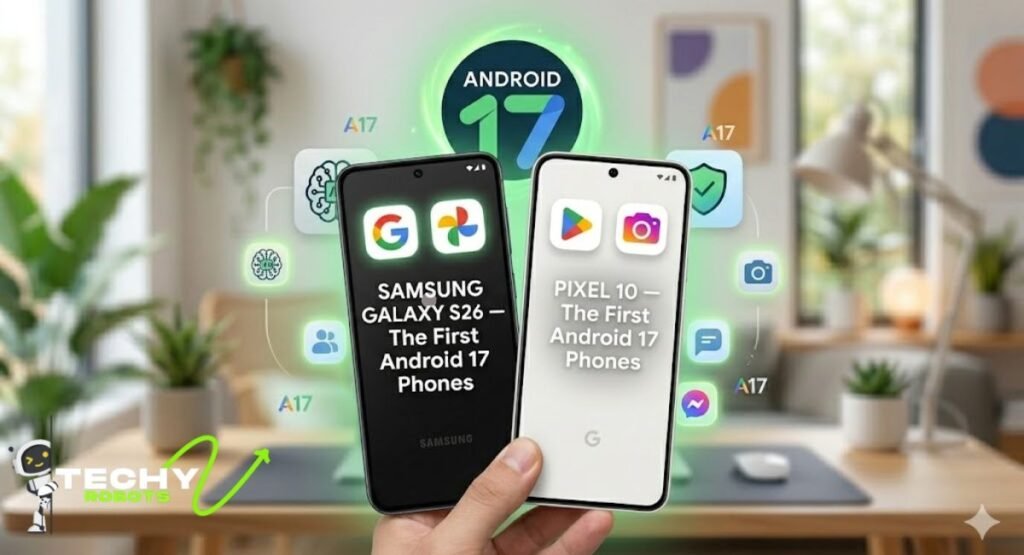
When Android 17 officially drops this summer, two devices will be front of the line. The Samsung Galaxy S26 and the Google Pixel 10 are expected to be the first phones to receive the stable Android 17 update, and both are already positioned as the primary hardware for Gemini Intelligence features.
The Galaxy S26 actually got something of an early advantage Samsung’s Galaxy S26 family received some Gemini Intelligence-related features ahead of the broader Android 17 rollout, which is a sign of how tightly Google and Samsung have been collaborating on AI features this generation. For anyone thinking about upgrading their phone in 2026, these two devices represent the clearest window into where Android is heading.
The Pixel 10 series, which launched in August 2025 with Android 16 pre-installed, will be among the first to receive Android 17 and the full Gemini Intelligence suite. The Galaxy Z Fold 8, expected in July 2026, is also expected to be an early recipient.
Android Update Tracker: How to Know if Your Phone Is Eligible
Not sure if your phone is getting Android 16 or Android 17? Here’s the simplest way to check.
Go to Settings → About Phone → Android Version to see what you’re currently running. Then go to Settings → System → System Update to check if an update is available. For most mainstream phones from Samsung, Google, OnePlus, Motorola, or Xiaomi from the last three years, Android 16 should already be available or incoming.
For Android 17, eligibility generally comes down to whether your phone is a current-generation flagship or a recent high-end model with committed software support. Google’s Pixel 6 and newer are confirmed. Samsung’s Galaxy S-series and some A-series models will get it. OnePlus 12 and newer are in line. Budget phones and older mid-range devices may stop at Android 16.
One helpful rule of thumb: if your manufacturer promised four or more years of OS updates, you’re likely in good shape for Android 17. Google now offers seven years of updates for Pixel devices from the Pixel 8 onwards, and Samsung offers seven years on Galaxy S-series flagship models.
The Future of Android: On-Device AI and Privacy
The biggest story in the Android ecosystem right now isn’t a single feature, it’s a philosophy shift. Google is moving Android toward a world where AI is woven into the operating system itself, not bolted on as a separate app. Gemini Intelligence is the most visible sign of that.
What makes this interesting from a privacy standpoint is that a lot of the processing is happening on-device. Contextual suggestions, notification summaries, and the Gemini Nano-powered automation in Android 17 all run locally on the phone rather than sending your data to remote servers. That’s a meaningful change from how many AI features have worked in the past.
Android’s privacy controls have also grown significantly across 16 and 17. You get more granular control over what apps can access, better visibility into when permissions are being used, and clearer signals about when AI features are drawing from your personal data. The opt-in design of Intelligent Autofill is a good example Google is trying to make power features available without forcing them on users who would rather keep their data siloed.
The Android ecosystem is also expanding outward. Wear OS 7, announced alongside Android 17 at Google I/O 2026, brings the Android 17 platform to smartwatches with a 10% improvement in battery efficiency and support for Live Updates on your wrist. Android Auto is getting deeper Gemini integration and a refreshed interface. The Android experience is no longer just a phone thing, it’s a connected platform spanning phones, tablets, cars, and wearables.
Conclusion
Android in 2026 is genuinely exciting and that’s not something people say about every software cycle. Android 16 quietly transformed how notifications work, how the OS looks, and how tablets and large-screen devices are treated. It did all of that without breaking anything, which is harder to pull off than it sounds.
Android 17 is about to raise the stakes further. The Gemini Intelligence announcement feels like a real turning point not just for Android, but for what smartphones are supposed to do. If multi-step AI automation actually works the way it was demoed, a lot of the tedious, repetitive tasks that currently eat your time could become genuinely hands-free.
The Android OS upgrade path in 2026 rewards people who bought flagship or recent mid-range phones from major manufacturers, especially Samsung and Google. If your device is a year or two old, there’s a good chance Android 16 is either already on it or coming soon. Android 17 will follow the same pattern starting at the top and working its way down. Either way, it’s worth checking your system update settings today.
FAQs
1. What is the latest version of Android right now?
The current stable version is Android 16, released on June 10, 2025. Android 17 is in beta and expected to launch as a stable release in June or July 2026.
2. Which phones will get Android 17 first?
The Samsung Galaxy S26 and Google Pixel 10 series are expected to be among the first devices to receive Android 17 when it officially launches. The Galaxy Z Fold 8 is also expected to follow shortly after.
3. What is Gemini Intelligence on Android 17?
Gemini Intelligence is Google’s umbrella branding for a set of proactive AI features in Android 17. It includes multi-step app automation, Create My Widget, Rambler voice dictation, and Intelligent Autofill all designed to help your phone complete tasks for you with minimal input.
4. Is my older Android phone still getting security updates?
Most phones released in the last two to three years from major brands still receive monthly or quarterly security patches even if they don’t qualify for the latest Android version. Check your manufacturer’s support page to confirm your device’s update end date.
5. How do I check if my phone has the latest Android update?
Go to Settings → System → System Update on your Android device. The phone will check for any available updates automatically. If you own a Pixel, you can also visit the Android Beta Program page to opt into pre-release builds.