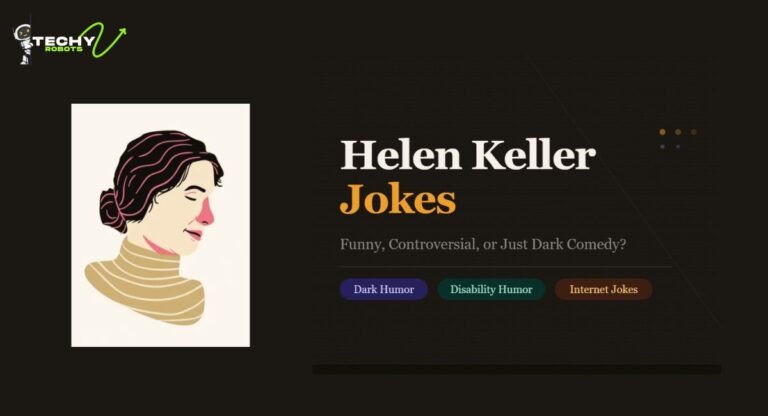
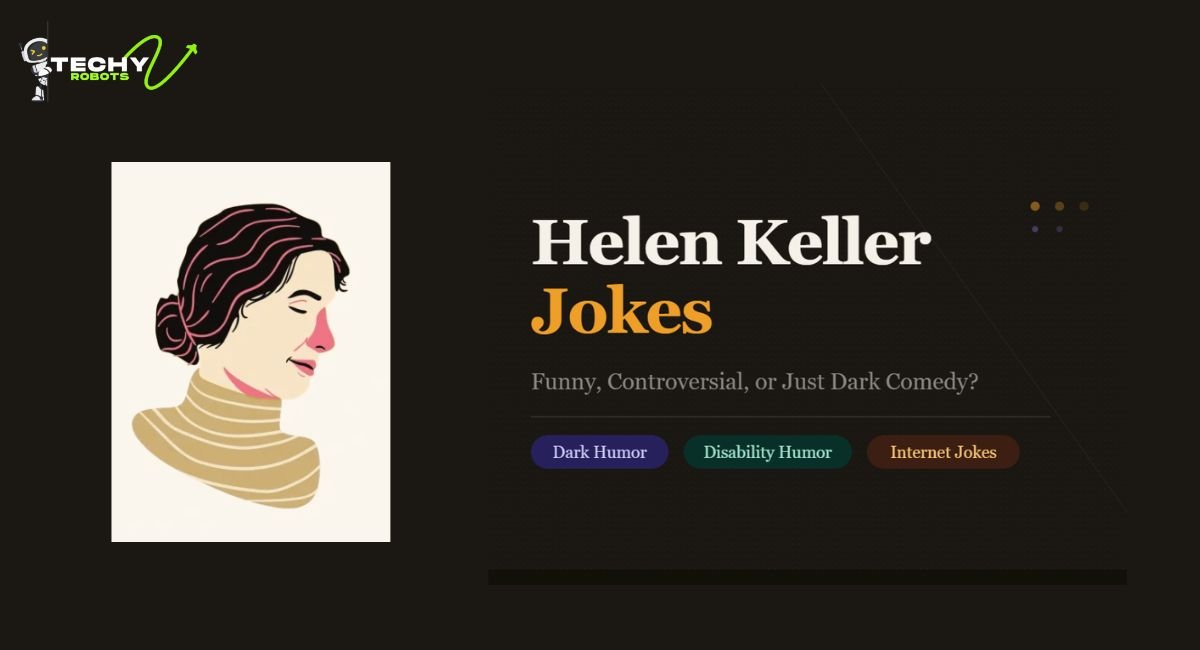
I was scrolling through jokes one day when I came across a huge collection of Helen Keller jokes. At first, I paused because I knew the topic could be sensitive. But as I read further, I noticed something interesting.
People use humor in many different ways, and sometimes it reflects internet culture more than real meaning. Some jokes are simple one liners, some are dark, and some are just made to get a quick laugh online. While reading them, I found myself thinking about how humor changes with time and how what people find funny today is not always the same as before.
This collection is meant to show that mix of humor and online trends. It is not about disrespect, but about understanding how jokes spread on the internet and why they sometimes become so widely shared and discussed in different communities.
Helen Keller Jokes: The Internet’s Most Controversial Humor Explained
If you’ve spent any time scrolling through Reddit threads, viral joke lists, or meme pages, you’ve probably stumbled across Helen Keller jokes. They pop up everywhere in comment sections, group chats, late-night humor forums. Some of them make you laugh before you catch yourself. Others make you wince. And that tension, that uncomfortable feeling of not knowing whether it’s okay to laugh, is exactly why they’ve been floating around the internet for decades.
But here’s the thing: before we even get into the jokes, we should probably talk about who Helen Keller actually was. Because the irony of her story is that she was one of the most capable, determined, and genuinely impressive human beings in modern history. The jokes that follow her name are almost laughably detached from her real legacy.
Who Was Helen Keller? A Quick Look Before the Laughs
Helen Keller was born in 1880 in Tuscumbia, Alabama. She was a healthy baby until an illness believed to be scarlet fever or meningitis left her both blind and deaf before her second birthday. That alone would stop most people in their tracks. For Keller, it was just the beginning.
Her story became globally known largely through The Miracle Worker, a play and later a film that dramatized her early education with teacher Anne Sullivan. Sullivan’s patience and Keller’s fierce determination together cracked open an extraordinary life.
Her Achievements That Still Inspire People Today
Keller didn’t just “overcome” her disabilities. She thrived. She graduated from Radcliffe College, making her the first deaf-blind person to earn a Bachelor of Arts degree. She wrote twelve books, traveled the world as a lecturer, and became a passionate advocate for people with disabilities, women’s suffrage, and labor rights.
She corresponded with presidents, befriended Mark Twain, and used tactile sign language and braille to communicate and read with remarkable fluency. Think about that for a second someone who could neither see nor hear, navigating the world with more grace and impact than most fully-sighted, fully-hearing people ever manage.
Why Her Story Matters in the Context of Humor
The reason Helen Keller specifically became a target for jokes isn’t really about her personally. It’s about the discomfort people feel around disability, and how humor has always been used to process that discomfort. That doesn’t automatically make every joke about her okay, but it does explain where the jokes come from.
What Are Helen Keller Jokes, Exactly?
Helen Keller jokes are a category of dark humor that plays on her deafness and blindness. They usually follow a simple setup: a premise involving something she couldn’t do or perceive, followed by a punchline that’s either surprisingly clever or just plain mean, depending on the joke.
The range is massive. Some are genuinely witty wordplay that would make a literature professor smirk. Others are lazy, shock-value stuff that adds nothing to anyone’s day. The good ones tend to focus on absurdity rather than cruelty.
Where Did These Jokes Come From?
These kinds of jokes didn’t start with the internet. Disability humor has existed as long as humor itself, which is a grim but honest observation. In the case of Helen Keller specifically, jokes became more widely spread in the 1980s and 1990s as part of the broader “dead baby jokes” and “sick humor” wave that made the rounds in schoolyards and photocopied joke books.
The internet simply gave them a permanent home and amplified them. Forums like Something Awful, early Reddit communities, and sites like 4chan turned them into a kind of ritual dark humor, the sort of edgy material that defined a certain era of internet culture.
How Did They Go Viral on the Internet?
Shock humor travels fast. Before the age of content algorithms, the most jarring or unexpected jokes spread because they were memorable. Helen Keller jokes hit a nerve in the best and worst sense: they were surprising, they made people react, and they sparked debates about what was acceptable to joke about.
That debate hasn’t gone away. If anything, it’s gotten louder in 2026 as conversations around disability representation, internet meme culture, and ethical comedy have all picked up steam.
A Collection of Helen Keller Jokes (Clean and Clever)
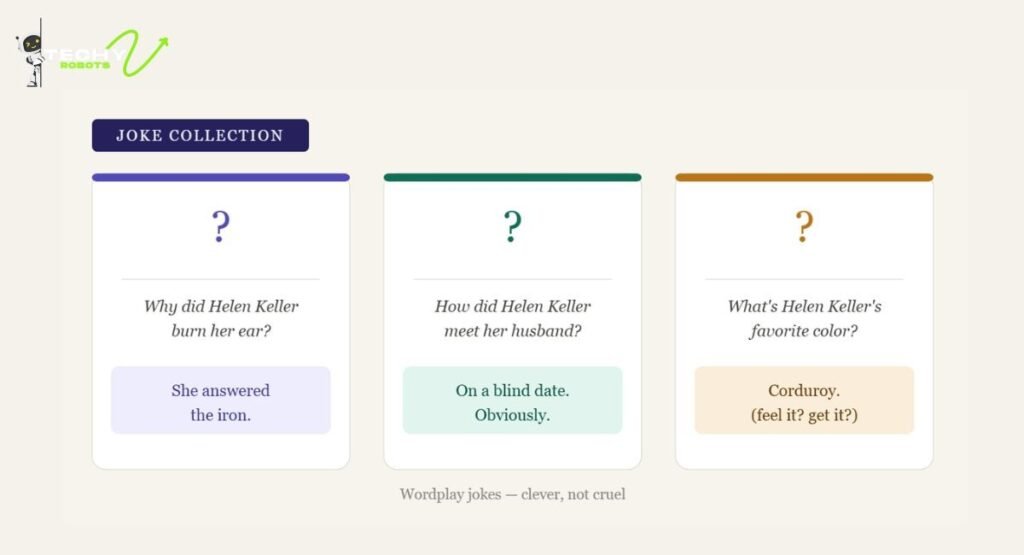
Let’s get to the part you probably scrolled here for. Here’s a curated collection of Helen Keller jokes that lean toward clever wordplay rather than outright cruelty. These are the kinds of jokes that make you think as much as they make you groan.
One-Liner Jokes That Play on Words
- Why did Helen Keller burn her ear? Because she answered the iron.
- Why does Helen Keller play piano with one hand? Because she uses the other to sing.
- How did Helen Keller burn the other ear? They called back.
- Why can’t Helen Keller drive? Because she’s a woman. (Yes, this one flips the expected punchline entirely — it’s a commentary on how the joke genre works as much as anything.)
- What’s Helen Keller’s favorite color? Corduroy.
- How did Helen Keller meet her husband? On a blind date. Obviously.
- Why does Helen Keller’s dog run away? You’d run too if your name was “Mrrphfgh.”
Puns That Are More Clever Than Mean
Some of the better Helen Keller jokes function almost like riddles; the humor comes from the setup, not from cruelty. The “blind date” joke, for example, is really just a clever use of a common phrase. The ear-burning jokes use a kind of recursive structure that’s closer to absurdist humor than mockery.
This is the version of dark comedy that actually has craft behind it. The punchline lands because of wordplay, not because someone’s suffering is the entire point.
The Dark Humor Debate: Funny or Offensive?
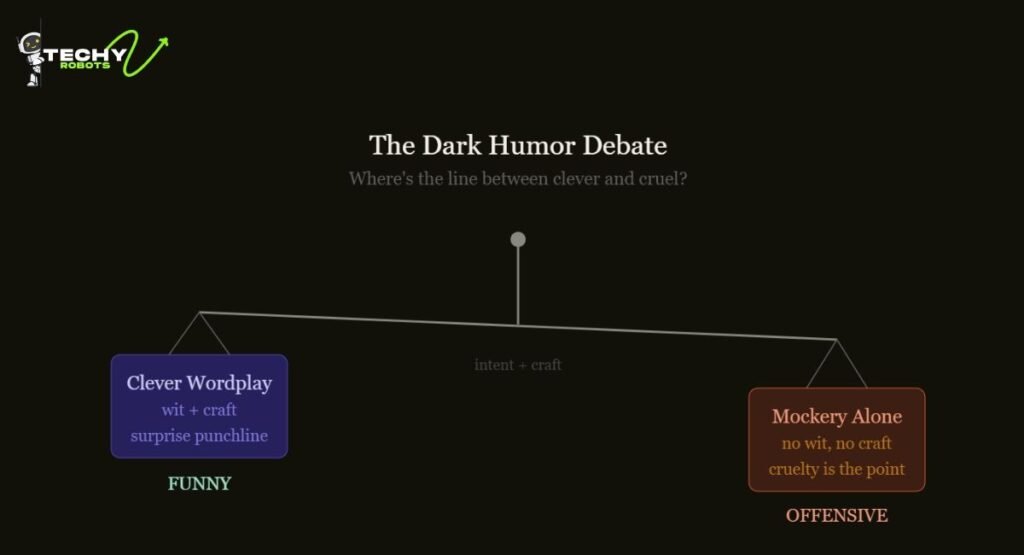
Dark humor has been a hot topic in comedy circles for years, and Helen Keller jokes sit right at the center of that debate. Where’s the line between a clever, edgy joke and something that’s just cruel?
What Makes Dark Comedy Work?
The best dark comedy punches at something larger than its subject. When a comedian makes a joke about death, it usually works because it’s addressing our collective fear of dying, not mocking a specific dead person. The craft matters. The intention matters.
Great dark humor tends to be self-aware. It knows it’s walking a line, and it uses that tension as part of the joke itself. The best Helen Keller jokes, funnily enough, actually work because they’re so absurd that they circle back to being clever wordplay rather than genuine attacks.
When Does a Joke Cross the Line?
A joke crosses a line when the entire point is to make the subject seem lesser. When there’s no wit, no wordplay, nothing to think about just someone’s disability as the punchline and nothing else that’s where most thoughtful people get uncomfortable.
The question “Is this joke punching down?” is worth asking. Punching down means directing humor at someone or a group with less social power than you. Punching up means directing it at power structures. Most of the worst Helen Keller jokes punch straight down with no comic payoff.
Helen Keller Jokes in Meme Culture and Social Media
Meme culture has transformed how jokes travel and mutate. Helen Keller jokes have been adapted into meme formats, reaction images, and viral posts across almost every major platform.
Reddit Threads and Viral Joke Lists
Reddit has been home to lengthy debates about whether Helen Keller jokes belong in the “edgy but harmless” category or whether they normalize mockery of people with disabilities. Subreddits devoted to dark humor regularly feature these jokes, and the comment sections tend to be fascinating: a mix of people finding them funny, people finding them tasteless, and people splitting philosophical hairs about the nature of comedy itself.
Viral joke lists on sites like BuzzFeed and similar content platforms have included Helen Keller jokes in “controversial humor” roundups, often accompanied by disclaimers or discussion sections that try to contextualize them.
TikTok and Twitter Humor Trends
On TikTok, dark humor content tends to perform well with younger audiences who have grown up with irony as a first language. Helen Keller-themed jokes occasionally trend in the form of skits, reactions, or “POV” style videos. Twitter (now X) is where the most heated debates about this kind of humor tend to happen, with threads regularly exploring whether specific jokes are acceptable.
What’s interesting is that in 2026, the conversation has shifted somewhat. There’s more awareness about disability representation in the media, and that awareness has started to influence how people consume and share this kind of humor, even casually.
The Psychology Behind Dark Humor
Why do people laugh at uncomfortable things in the first place? It’s a genuinely interesting question, and psychologists have been studying it for a while.
Why People Laugh at Uncomfortable Things
Laughter is partly a release valve. When something is taboo or uncomfortable, humor creates a socially acceptable way to acknowledge it. It’s why people make jokes at funerals, why gallows humor exists in high-stress professions like emergency medicine, and why some of the funniest comedians in history have made material out of their own suffering.
Dark humor also signals a kind of cognitive flexibility. Processing a joke that involves a disturbing subject requires you to hold two things in mind at once: the discomfort of the subject and the structure of the joke. That mental juggling act is part of what makes it funny.
Humor as a Coping Mechanism
There’s a reason that communities dealing with hardship often develop rich traditions of dark humor. It’s not callousness, it’s survival. Making light of difficult things is one way humans process the weight of the world without being crushed by it.
That doesn’t mean every dark joke is therapeutic, and it certainly doesn’t mean everyone has to find them funny. But understanding why dark humor exists is an important context for any conversation about whether specific jokes are okay.
Disability Humor: A Sensitive but Real Conversation
Here’s where things get genuinely nuanced. Humor about disability isn’t a monolith. Plenty of disabled comedians make jokes about their own disabilities, and those jokes are often far sharper and more insightful than anything a nondisabled person would write.
The Difference Between Punching Up and Punching Down
When a comedian with a disability makes jokes about their own experience, there’s an intimacy and authority there that fundamentally changes the dynamic. They’re not an outsider mocking something they don’t understand. They’re using humor to reclaim a narrative.
Helen Keller jokes told by people who have no personal connection to being deaf or blind are a very different thing. They’re outsiders using someone else’s experience as material. That doesn’t automatically make them wrong, but it’s worth sitting with.
What the Disability Community Actually Says
Perspectives within the disability community on this topic are genuinely mixed. Some advocates argue firmly that any humor rooted in disability mockery reinforces harmful stereotypes. Others take a more pragmatic view: that the funniness or offensiveness of a joke depends heavily on context, intent, and execution, not just subject matter.
What most people in that space agree on is that representation matters. When the only time disability appears in popular culture is as a punchline, that’s a problem. Helen Keller jokes aren’t inherently more offensive than any other dark humor but the broader pattern of how disability gets represented is worth paying attention to.
Ethical Comedy: Where Is the Line?
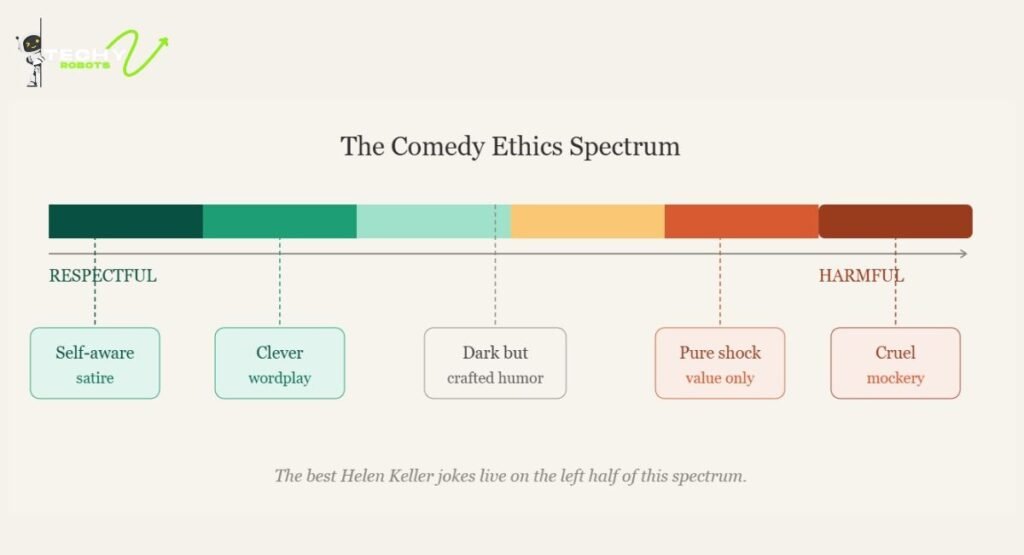
This is the question that every comedy writer, open mic performer, and casual joke-teller eventually has to wrestle with.
Satire vs. Mockery
Satire uses humor to critique something larger: a social structure, a cultural norm, a power imbalance. Mockery is just making fun of something for its own sake. The best comedy, even when it’s dark, tends to have a satirical edge. It’s saying something beyond the punchline.
The Helen Keller jokes that age best are the ones with actual wit behind them. The ones that play on language, on absurdity, on the human tendency to reduce complicated people to simple labels. Those jokes are, in a weird way, doing something interesting. The ones that are just “she couldn’t see or hear, that’s funny” are not.
How Modern Comedy Has Evolved
Comedy in 2026 is genuinely different from comedy in 2006. Audiences are more attuned to context, more aware of how jokes land on different communities, and more likely to push back when something feels lazy rather than sharp. That doesn’t mean dark humor is dead, far from it. It means the bar for what counts as actually clever has gotten higher.
Comedians who thrive in the current landscape tend to be ones who understand that offense alone isn’t the point. Surprise, subversion, truth-telling, those are what make jokes last.
Clean vs. Offensive Jokes: What the Internet Prefers
Interestingly, clean and clever jokes consistently outperform purely shock-value content in terms of long-term engagement. Memes that rely on wit rather than pure offense get shared more widely because they work across a broader audience.
Helen Keller jokes that lean toward wordplay the “blind date” style puns, the absurdist one-liners travel further than the truly mean-spirited ones. There’s a lesson there about what actually makes humor stick.
The internet has also shown that context matters enormously. A joke shared in a dark humor subreddit lands differently than the same joke posted on a general interest page. Audience, framing, and tone all shift how material gets received.
Conclusion
Helen Keller jokes occupy a strange corner of internet humor. They’re built around a real person who was, by any measure, genuinely remarkable and they turn her disabilities into punchlines. Whether that’s funny, offensive, or somewhere in between depends heavily on the specific joke, the intent behind it, and who’s laughing.
What’s undeniable is that these jokes have stuck around because they tap into something real: our collective awkwardness around disability, our fascination with taboo, and our love of wordplay. The best versions of this humor are clever enough to earn a reluctant laugh. The worst are just lazy.
Helen Keller herself was known for her sharp wit. She once said that life is either a daring adventure or nothing at all. That spirit of bold engagement with the world even when it’s uncomfortable is something worth keeping in mind the next time you encounter a joke that makes you unsure whether to laugh.
FAQs
1. Are Helen Keller jokes considered offensive?
It depends on the joke. Clever wordplay and absurdist puns tend to land differently than jokes that are simply mean-spirited. Most people agree the line is whether the humor has any wit behind it or whether it’s just mockery for its own sake.
2. Why does dark humor exist in the first place?
Dark humor is one way humans process discomfort, fear, and taboo subjects. It’s psychologically rooted in our need to create distance from difficult realities. It doesn’t mean everything is fair game, but it does explain the appeal.
3. Is it okay to share Helen Keller jokes online?
Context matters a lot. In a dark humor forum where everyone knows what they’re signing up for, different rules apply than in a general audience setting. Consider your audience and the intent behind what you’re sharing.
4. What did Helen Keller actually accomplish?
Helen Keller was the first deaf-blind person to earn a college degree, wrote twelve books, lectured internationally, and was a major advocate for disability rights, women’s suffrage, and workers’ rights. She was, by any measure, extraordinary.
5. How has comedy changed when it comes to disability humor?
Modern comedy is generally more aware of the difference between punching up and punching down. Jokes about disability that come from within that community or that have genuine wit behind them tend to be better received than lazy shock-value material. The bar for what counts as clever has risen considerably.