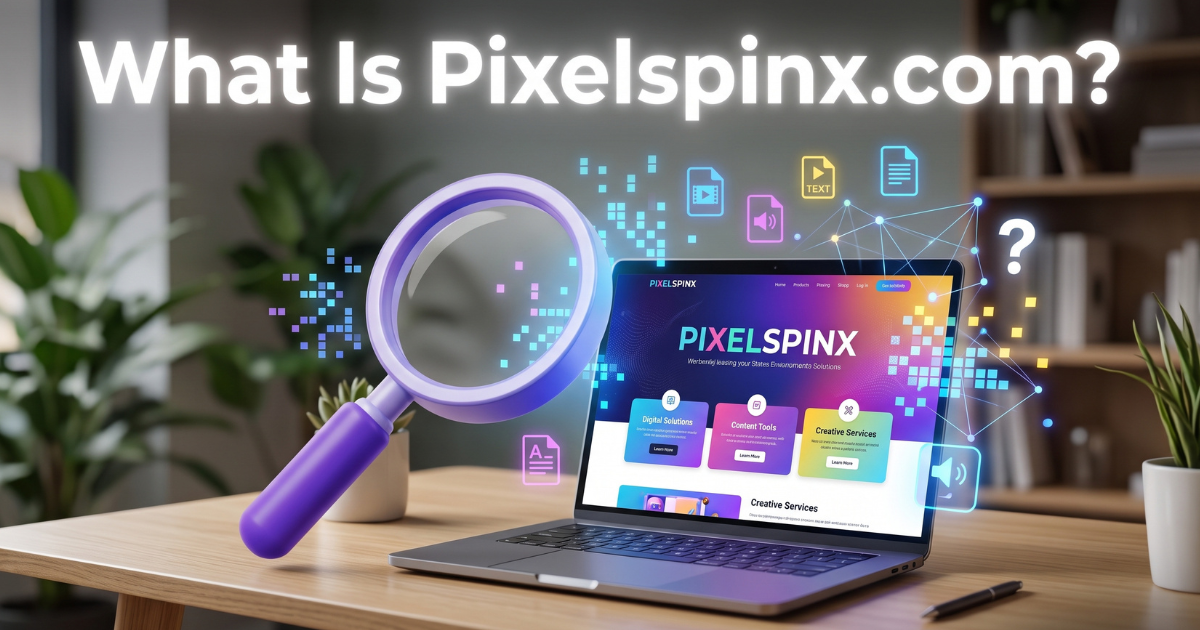
If you’ve come across “pixelspinx com” in a search and aren’t sure what you’re looking at, you’re not alone. It’s a newer creator platform, and newer names don’t have years of reviews and forum threads to lean on yet. Here’s a clear, no-hype breakdown of what it is, how it works, and whether it fits what you’re trying to build.
Quick Answer: What Is Pixelspinx com?
Pixelspinx com is a publishing platform built for independent creators, writers, designers, educators, and small businesses who want a permanent home for long-form content instead of relying only on social feeds. Based on what’s publicly available, it’s oriented toward structured, evergreen articles and creator branding rather than short-form, fast-scrolling posts. Because it’s a newer name, it doesn’t carry the track record or transparency of established platforms like Substack or Patreon yet.
Pixelspinx com at a Glance
| Aspect | What we know so far |
| What it is | A publishing platform aimed at independent creators |
| Best for | Long-form articles, tutorials, portfolios, evergreen content |
| Content style | Structured and lasting, not short social posts |
| Ownership | Not clearly published |
| Maturity | Early stage, smaller audience than Substack or Patreon |
| Security | Runs on HTTPS with a valid SSL certificate |
| Pricing | Not clearly documented, check the official site directly |
Treat this table as a starting point. Some of these details come from third-party write-ups rather than official documentation, and that gap is worth keeping in mind before you commit anything to the platform.
What the Platform Is Trying to Do
The core pitch is ownership. Instead of putting effort into a social post that gets buried by an algorithm within a day, creators publish content on a profile meant to hold its value over time. It’s the same logic that pushed a lot of writers toward newsletters and independent blogs over the last several years.
The platform leans on evergreen content, guides and articles that keep attracting readers months or years after publishing, rather than posts built for a single day’s attention span. A well written how-to guide can pull in search traffic for a long time. A social post usually has a shelf life of hours.
Branding is the other piece. On most social platforms, the algorithm decides what people see and your identity is secondary. On a platform like this, your name and body of work are the main event, which matters if you’re trying to build a reputation in a specific niche.
What You Can Actually Publish
Written content fits best here. In-depth guides, breakdowns, opinion pieces, and educational resources all suit a long-form format, and they’re exactly the kind of content search engines tend to reward over time.
Visual creators have a place too. A designer or photographer can build a portfolio with written context around each project, which usually does more to convert a visitor into a client than images alone.
It also works for people teaching something specific, tutorials, niche research, instructional series. What ties all of it together is depth. Thin or repetitive content doesn’t perform well here, or anywhere else for that matter.
Who’s Behind Pixelspinx com?
This is genuinely unclear right now. Detailed information about the founders, company structure, or team isn’t widely published. That’s not unusual for a young platform still building its public presence, but it’s worth noting as a reason to be careful.
Limited transparency doesn’t automatically mean something’s wrong. Plenty of legitimate products launch quietly and fill in their story later. Still, it makes sense to read the terms of service and privacy policy before publishing anything you’d be upset to lose.
How Pixelspinx com Works
The process follows a pattern most creators will already recognize.
Setting Up an Account
Sign up with your basic details, verify your email, then build out a profile with a photo, short bio, and links. A complete profile matters more than people expect, it’s often the first thing that tells a new visitor whether your content is worth their time.
Publishing Content
Write something genuinely useful first, then structure it properly: a clear title, logical headings, clean formatting, and relevant images where they help. Good structure keeps readers on the page and makes it easier for search engines to understand what the piece covers.
Getting Found
Publishing is only part of the job. Actual discovery depends on content quality, search visibility, and how much you promote your own work. Creators who share new pieces through email lists, communities, or social channels almost always do better than those who just wait for the platform to surface their content, especially early on when the built-in audience is still small.
What Sets It Apart
The general pitch is a calmer, more intentional space compared to feed-driven social platforms. Where most networks are designed to maximize scrolling time, this one leans toward structured publishing over constant engagement bait.
Creator identity coming first is the other distinguishing point. Your name and catalog of work sit at the center, which suits people building long-term authority in a niche rather than chasing short-lived viral moments.
What’s Known About Monetization
This is where it’s worth being upfront: exact monetization details aren’t clearly documented in public sources. Platforms in this category typically offer some combination of the following, but you’ll want to confirm what’s actually live on Pixelspinx com before planning around it:
- Ad or traffic based earnings from your content’s readership
- Gated or premium content for deeper resources
- Selling digital products like templates or courses
- Reader-supported tips or memberships, similar to Patreon
Don’t assume any of these features are active until you see them on the platform directly. Monetization tools vary a lot between creator platforms and tend to change as a service matures.
Why Long-Form Content Still Works
The platform’s bet on long-form content isn’t sentimental, it reflects how search engines actually rank pages. Detailed, genuinely useful content tends to keep earning traffic long after it’s published, while short posts spike briefly and then disappear from view. One solid guide can quietly bring in readers for years.
Long-form also builds credibility faster. When an article fully answers a question, with real steps, examples, and honest trade-offs, it reads as the work of someone who actually understands the topic. That’s usually what turns a one-time visitor into a repeat reader.
Interface and User Experience
Early impressions describe a clean, simple interface built around straightforward publishing, with basic mobile support for reading and light editing. Treat that as a general impression rather than a guarantee, interfaces change over time, and testing it yourself with one piece beats relying on any single review.
For beginners, the learning curve looks manageable. Anyone who’s used a blogging or newsletter tool before should find their way around fairly quickly.
Who Should Actually Consider This Platform?
It’s not the right fit for everyone, and that’s fine.
Independent creators who want a home base they fully control, rather than a rented spot in someone else’s feed, are the clearest fit.
Bloggers and niche writers building authority around a specific topic benefit from a structured library that compounds in value over time.
Designers and visual creators can pair a portfolio with written context, which tends to convert browsers into clients better than images alone.
Educators and tutorial creators benefit from a lasting, searchable format that students or readers can come back to.
Anyone who needs an existing built-in audience right away, or who isn’t ready to promote their own work, will probably be better served elsewhere for now. A newer platform rewards people who bring some of their own traffic.
The SEO Side of Things
Platforms built around long-form, evergreen content have real search potential, but the platform itself is only half of it. What you write and how consistently you publish matter more. A few things that genuinely help, regardless of where you publish:
- Answer a real search question completely, and better than the current top-ranking pages
- Structure content for skimming with clear headings, short paragraphs, and lists
- Publish on a steady schedule rather than in occasional bursts
- Earn genuine links and shares by promoting your own work
- Go back and update older pieces instead of letting them go stale
One honest caveat: publishing on a newer domain usually means a slower ramp in visibility, since search engines lean heavily on a site’s established trust. According to Google’s own guidance on creating helpful content, the emphasis has shifted toward rewarding original, people-first content over volume, which works in favor of creators who focus on depth from the start rather than churning out thin posts.
Is Pixelspinx com Safe and Legit?
On the basics, the signals are reassuring. The site runs over HTTPS with a valid SSL certificate, meaning data in transit is encrypted, and there are no widely reported issues with malware or phishing. As a place to read or publish general content, it currently reads as a legitimate platform rather than anything resembling a scam.
The honest caveats are that it’s new, independent reviews are still thin, and there isn’t much public information about who runs it. That doesn’t make it dangerous, it makes it unproven. A reasonable approach is cautious use: try it, but don’t put anything on it you can’t afford to lose, and keep backups of your work elsewhere.
Use a strong, unique password and turn on two-factor authentication if it’s available. Read the terms of service and privacy policy before publishing original work, and don’t share sensitive financial information until you’ve done your own checks on the platform.
How to Vet Any New Creator Platform
This applies well beyond Pixelspinx com, it’s a useful checklist for evaluating any unfamiliar platform before investing real time in it.
- Look for a real “about” page or named team. Total anonymity is a warning sign.
- Check whether you can export your content and audience if you decide to leave.
- Confirm the terms clearly state you retain ownership of what you publish.
- Test with one piece of content before moving your full catalog over.
- Search for independent reviews, and be skeptical if several sound suspiciously alike.
- Keep an email list and backups you fully control, never depend on one platform alone.
The Real Drawbacks
Smaller built-in audience. Unlike an established network, a newer platform won’t hand you readers automatically. Early on, you’ll need to bring your own.
Crowded competition. Substack, Medium, Patreon, and countless personal blogs are all competing for the same creator attention. A new name has to earn its place.
Platform dependency risk. Building entirely on any third-party platform carries risk. If policies, pricing, or the platform itself change, your work and audience can be affected. An email list you actually own is the real insurance policy here.
Limited track record. With less history and public documentation, you’re taking more on trust than you would with an established name.
Pixelspinx com vs Substack vs Patreon
These platforms aren’t built to do the exact same thing, so this is more of a conceptual comparison than a spec-for-spec match.
| Platform | Core strength | Best for | Maturity |
| Pixelspinx com | Long-form, evergreen publishing | Articles, portfolios, searchable resources | Early stage, less public information |
| Substack | Email newsletters and paid subscriptions | Writers building a subscriber base | Established, large user base |
| Patreon | Memberships and recurring fan support | Creators with an existing audience to monetize | Established, mature payment system |
In practice: Substack makes sense if your growth strategy runs through email, Patreon fits creators who already have a paying fanbase, and a platform like Pixelspinx com is aimed at people who want a searchable, evergreen home base, with the trade-off that it’s newer and still building trust.
Why It’s Getting Attention Right Now
Two things seem to be driving interest. First, more creators are looking to own their work outright as trust in algorithm-driven feeds keeps eroding. Second, a growing number of write-ups have put the platform name in front of people actively searching for new creator tools. Attention isn’t the same as a proven track record though, curiosity is a reason to look into it, not a reason to commit right away.
FAQs
What is Pixelspinx com in simple terms?
It’s a publishing platform for independent creators who want a lasting home for long-form content, articles, guides, portfolios, instead of relying only on social media.
Is Pixelspinx com free to use?
Pricing isn’t clearly documented in public sources right now. Some platforms in this category offer a free tier with paid upgrades, others charge from the start. Check the official site directly for current pricing.
Is Pixelspinx com safe and legit?
The basics look fine, HTTPS with a valid SSL certificate and no widely reported malware issues. It reads as a legitimate platform, but it’s new with limited public transparency, so standard precautions apply: a strong password, backups, and reading the terms before you commit.
Who owns or runs Pixelspinx com?
That information isn’t widely published yet, which is common for young platforms. It’s not proof of a problem, but it’s a good reason to do your own research before relying on the platform for anything important.
How does it compare to Substack or Patreon?
Substack focuses on email newsletters and paid subscriptions. Patreon centers on memberships and fan support. Pixelspinx com leans toward evergreen, searchable publishing and creator branding. The biggest difference is maturity, Substack and Patreon are established, this platform is still new.
Key Takeaways
- Pixelspinx com is an early-stage creator platform focused on long-form, evergreen publishing and creator branding.
- It suits writers, designers, educators, and niche publishers who want a home base they control.
- Public information on ownership, pricing, and exact features is limited, so confirm details directly on the site.
- Security basics look fine, but the platform is still unproven, so standard caution applies.
- You’ll need to bring your own promotion, a newer platform won’t hand you an audience.
- Never build your entire presence on one platform, keep backups and an email list you own.
The Bottom Line
Pixelspinx com is a genuinely interesting early entry in the creator platform space, built around lasting, searchable content instead of disappearing posts. The upside is ownership and a calmer publishing experience. The trade-off is that it’s new, lightly documented, and unproven. If the concept fits what you’re building, test it with a small piece of content first, keep your own backups, and don’t bet your entire online presence on any single platform.