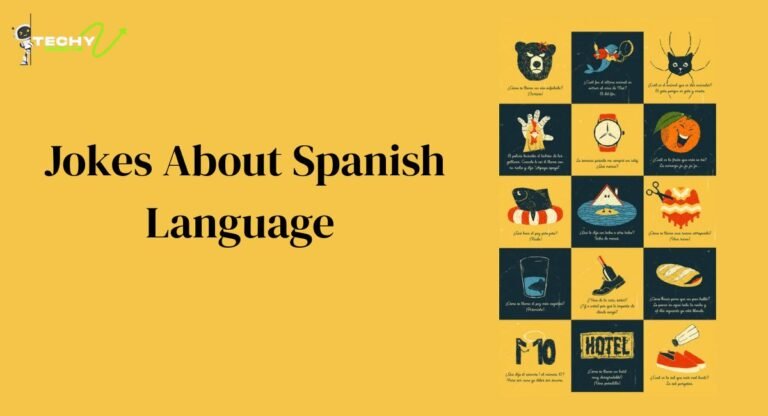
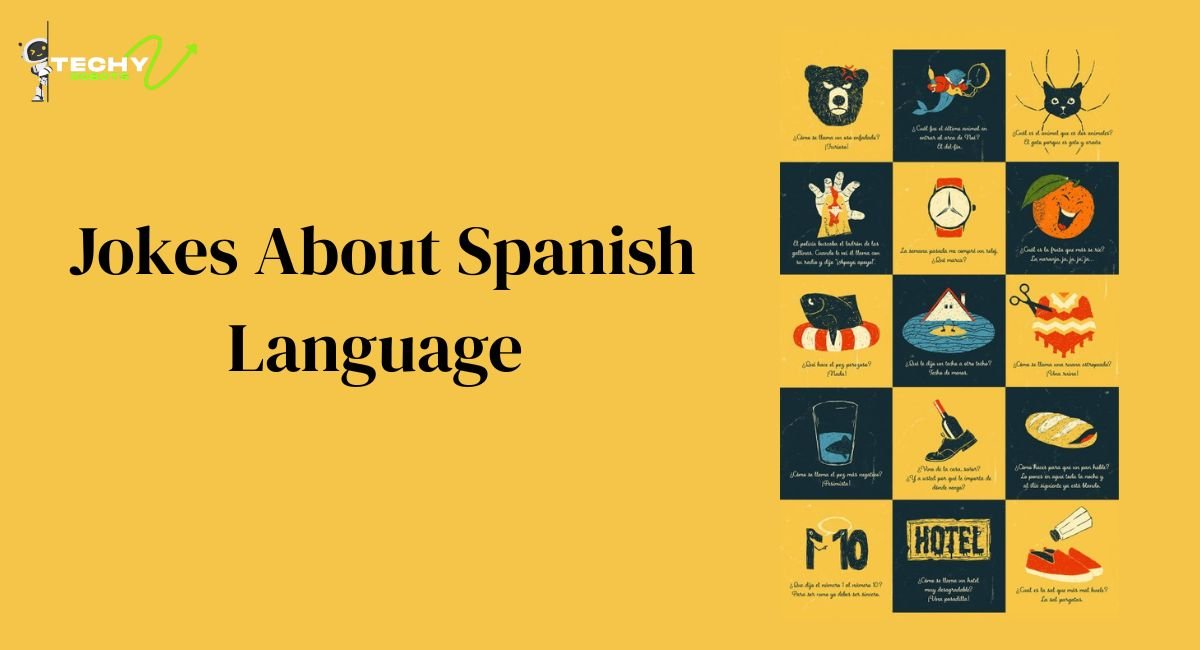
Most people think learning a language is like doing homework for the rest of their lives. Vocabulary lists, irregular verbs, confusing grammar rules, and a whole lot of confusion about when to use ser versus estar. But here’s the thing nobody tells you upfront: Spanish is also absolutely hilarious.
Jokes about Spanish language have a way of doing something incredible. They make you laugh while sneaking grammar lessons and vocabulary into your brain when you least expect it. Whether you’re a complete beginner, a fluent speaker, or somewhere in the comfortable middle of “I can order tapas without embarrassing myself,” Spanish humor has something for you.
So grab a cup of café con leche, sit back, and let’s dive into the wonderful, weird, and wildly funny world of Spanish jokes, puns, and wordplay.
Why Spanish Jokes Hit Differently
The Magic of Bilingual Wordplay
There’s a reason bilingual humor feels like discovering a secret code. When you understand a joke in two languages, you’re not just laughing at the punchline. You’re celebrating the fact that your brain is doing something genuinely impressive.
Spanish is one of the richest languages in the world for wordplay. With over 500 million native speakers spread across Spain, Mexico, Argentina, Cuba, Chile, Colombia, and beyond, the language has evolved in dozens of different directions. Each region brought its own slang, its own rhythm, its own jokes. That diversity is exactly what makes jokes about the Spanish language so endlessly entertaining.
Take homophones, for example. Spanish is full of words that sound similar but mean wildly different things. The word vaca (cow) sounds a lot like baca (roof rack on a car). Hola (hello) sounds like ola (wave). These little phonetic coincidences are the raw material of some of the funniest chistes you’ll ever hear.
How Humor Connects You to a Language
You probably can’t recall what you had for lunch three Tuesdays ago, but you can recite every line from your favorite comedy movie. That’s not an accident. Laughter triggers a dopamine response in your brain, and dopamine is essentially your brain’s way of saying “save this, it’s important.”
Language researchers have talked for years about something called the affective filter hypothesis, which basically means that when you’re relaxed and enjoying yourself, you absorb language much more naturally than when you’re stressed. Spanish humor lowers that filter completely. A funny joke about irregular verbs is more likely to stick in your memory than an entire flashcard deck.
And there’s more. Jokes force you to understand context. When you finally “get” a Spanish pun, you understand the vocabulary, the grammar, the cultural reference, and sometimes even the regional accent all at once. That’s a lot of language learning packed into one laugh.
The Best Funny Spanish Jokes You Need to Know
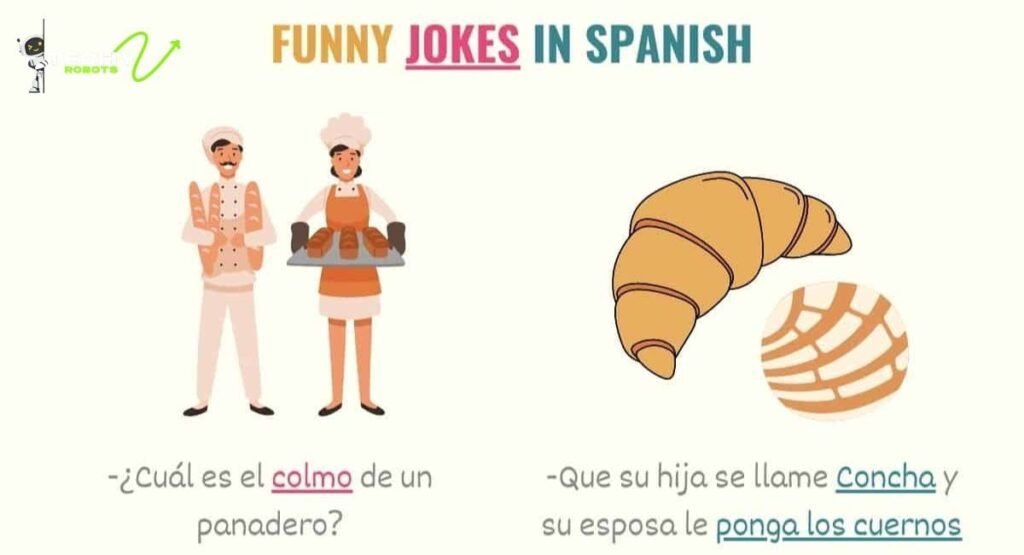
Classic Spanish One-Liners That Never Get Old
Let’s start with some quickfire humor. These are the kinds of jokes you’d hear at a Spanish family dinner table, at a school break, or on a Spanish Twitter feed right next to three crying-laughing emojis and a “jajajaja.”
¿Por qué los pájaros no usan Facebook? (Why don’t birds use Facebook?) Porque ya tienen Twitter. (Because they already have Twitter.)
Simple, clean, and works in any language. But now let’s get into the genuinely Spanish-flavored ones.
¿Cuál es el nombre del campeón japonés de buceo? Tokofondo.
This one plays on the Spanish phrase toco fondo (I hit rock bottom) squeezed into what sounds like a Japanese name. The punchline is entirely dependent on Spanish phonetics. Try explaining that joke in translation and it just falls apart, which is exactly what makes it beautiful.
Un hombre entra a una biblioteca y le dice al bibliotecario: “Un filete, papas fritas y una Coca-Cola.” El bibliotecario le responde: “Señor, esto es una biblioteca.” El hombre dice en susurros: “Perdón. Un filete, papas fritas y una Coca-Cola.”
(A man walks into a library and says to the librarian: “A steak, fries, and a Coke.” The librarian says: “Sir, this is a library.” The man whispers: “Sorry. A steak, fries, and a Coke.”)
That one works in any language, honestly, but it hits with a very particular deadpan charm in Spanish that’s hard to replicate.
Spanish Dad Jokes (Chistes de Papá) That Are So Bad They’re Good
There’s a universal agreement that dad jokes are terrible and yet somehow irresistible. In Spanish, the tradition of the chiste de cuñao (brother-in-law joke) is the cultural equivalent. It’s the kind of joke that makes everyone groan but secretly grin.
¿Qué hace una abeja en el gimnasio? Zum-ba. (Zumba, but also the buzzing sound a bee makes.)
¿Te has preguntado qué le dijo el semáforo al automóvil? No me mires que me estoy cambiando. (Don’t look at me, I’m changing.)
¿Por qué el libro de matemáticas estaba triste? Porque tenía demasiados problemas. (Because it had too many problems.)
These jokes live entirely in Spanish phonetics and wordplay. The bee gym joke only works because zum sounds like the Spanish onomatopoeia for buzzing, and Zumba is a well-known exercise class. In translation, the whole setup collapses.
Why Dad Jokes Work in Spanish
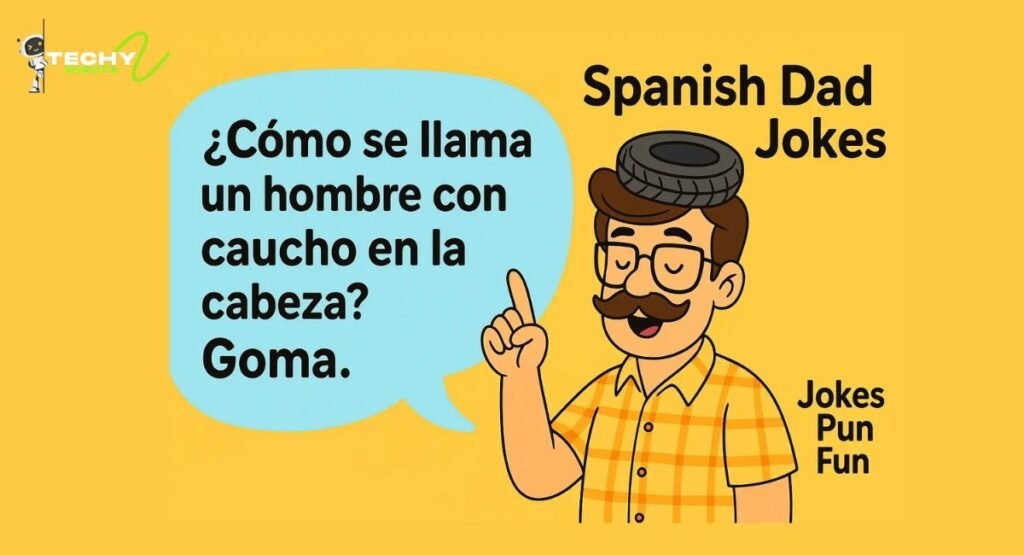
Dad jokes work because they exploit the gap between what you expect to hear and what you actually hear. In Spanish, that gap is enormous. The language has so many homophones, double meanings, and phonetic accidents that almost every sentence contains at least one potential pun waiting to happen.
When Spaniards and Latin Americans write “jajaja” online instead of “hahaha,” they’re not just writing the same thing with different letters. The j in Spanish makes a rough, breathy sound from the back of the throat, so “jajaja” genuinely sounds different when spoken out loud. There’s even “jejeje” and “jijiji” for different tones of laughter. That layered approach to expressing humor runs deep in Spanish-speaking culture.
Spanish Knock-Knock Jokes (Toc Toc)
Toc Toc Jokes for Kids and Adults
In English, you say “knock knock.” In Spanish, you say toc toc. Same idea, completely different sound, and the jokes that follow are equally brilliant and groan-worthy.
Toc toc. ¿Quién es? Interrumpiendo vaca. Interrumpiendo vaca ¿quié—? ¡MUUU!
Yes, Spanish speakers have their own version of the “interrupting cow” knock-knock joke. It’s exactly as chaotic and delightful in Spanish as it is in English, which tells you something about the universality of absurd humor.
Here’s one that plays more with Spanish language specifically:
Toc toc. ¿Quién es? Amos. ¿Amos quién? Amos a entrar, ¿abres o no? (We’re going to come in, are you opening or not?)
The humor here sits in the phrase amos a entrar, which is colloquial Spanish for vamos a entrar. It sounds like a name at first, then snaps into meaning as an impatient demand. That kind of linguistic whiplash is pure comedy.
The Structure of a Spanish Knock-Knock Joke
What makes toc toc jokes interesting from a language learning angle is that they follow a rigid structure, which means beginners can actually practice real conversational patterns while laughing. The setup always uses ¿Quién es? (Who is it?), the response introduces a word or name that sounds ambiguous, and the punchline forces the listener to reinterpret everything they just heard.
That reinterpretation is the brain working hard in the background. And when it happens through laughter, you remember the vocabulary. You remember the grammar. You remember the cultural context. Learning doesn’t always have to feel like studying.
Bilingual Jokes and Spanglish Humor
When English and Spanish Collide
Spanglish is not a mistake. It’s a creative, expressive, living form of communication that millions of bilingual people use every single day, especially across the United States, Puerto Rico, and border communities between Mexico and the US.
Spanglish jokes tap into the beautiful chaos of having two languages rattling around in your head at the same time.
Why did the Spanish student fail the exam? Because when the teacher said “No hables,” he thought she said “No apples” and stopped eating his lunch.
What did the Spanish ghost say? Boo-enas noches. (A play on “Buenas noches,” meaning “Good night.”)
These kinds of jokes only land when your brain has at least some foothold in both languages. That’s part of their charm. They reward the effort of bilingualism with a laugh.
Spanglish Wordplay That Makes Bilinguals Laugh Out Loud
Some of the funniest Spanglish jokes come from false cognates, words that look similar in Spanish and English but mean completely different things. These are sometimes called “false friends” in linguistics, and they cause a wonderful amount of confusion.
Embarazada does not mean “embarrassed.” It means “pregnant.” You can imagine how that mix-up goes.
Sensible in Spanish means “sensitive,” not “sensible.” So telling a Spanish speaker their plan is very sensible might get you a confused look.
Actual in Spanish means “current” or “present day,” not “actual.” So el presidente actually means “the current president,” not “the actual president.”
These false cognates are the linguistic equivalent of a banana peel on the floor. You don’t see it coming until it’s too late, and then you’re on the ground laughing.
Spanish Puns and Wordplay (Juegos de Palabras)
Double Meanings in Spanish (Doble Sentido)
Spanish is a language that practically begs to be punned. The doble sentido (double meaning) joke is a staple of Spanish comedy from Spain to Argentina, and mastering it is basically a rite of passage for anyone serious about understanding Spanish humor.
¿Qué le dijo el 0 al 8? Bonito cinturón. (Nice belt.)
When you look at 0 next to 8, the 8 looks like a zero with a belt. That’s pure visual-verbal pun territory, and it works in Spanish because cinturón (belt) is just funnier in that context than “belt” would be in English.
Spanish Homophones That Are Pure Comedy Gold
¿Cuál fue la razón por la que el esqueleto no fue a la fiesta? Porque no tenía cuerpo para eso. (Because he didn’t have the body for it / wasn’t feeling up to it.)
The word cuerpo means both “body” and is used in the expression “no tener cuerpo para algo” (not being in the mood for something). That double meaning is exactly the kind of thing that makes Spanish jokes so linguistically satisfying.
¿Qué diferencia hay entre un elefante y una pulga? Un elefante puede estar lleno de pulgas, pero una pulga nunca puede cargar con un elefante. (An elephant can have fleas, but a flea can’t have elephants.)
This one is less about wordplay and more about that delightful absurdist logic that pops up constantly in Latin American humor.
False Cognates That Lead to Hilarious Misunderstandings
The world of false cognates is genuinely endless. A beginner who walks into a library in Spain and says they’re looking for a book about preservativos (condoms, not preservatives) is about to have a very memorable learning experience. The word for food preservatives in Spanish is conservantes. Mix those up at a supermarket and you’ll have a story to tell for years.
That kind of mix-up captures something important about language learning. Mistakes aren’t failures. They’re just jokes waiting to be told.
Learning Spanish Through Jokes
How Humor Boosts Vocabulary Retention
There’s real science behind why funny things stick in our memories better than dry information. When you laugh, your brain releases a combination of dopamine and endorphins, creating a positive emotional memory that gets stored more deeply than neutral information. This is why you can remember the punchline of a joke you heard in 2009 but not what you had for breakfast last Thursday.
Spanish jokes are a particularly effective learning tool because they usually hinge on a very specific word or phrase. To get the joke, you have to understand that word. And understanding it through humor means you’ve already encountered it in context, seen how it sounds, and experienced the emotion of understanding something in a foreign language. That’s a complete vocabulary lesson in about ten seconds.
Spanish Jokes for Beginners With English Translations
Here are a few easy ones that work perfectly for beginner learners:
¿Cómo se dice “no” en japonés? ¡No sé! (“I don’t know!” but it sounds like “nosey” in Japanese context, and also directly means “I don’t know” in Spanish.)
¿Qué hace una vaca cuando está de vacaciones? Nada. (Nothing / Swimming because nada means both “nothing” and “she swims.”)
That vaca/vacaciones connection is also a fun bonus. Vacaciones (vacation) literally contains the word vaca (cow), which has led to a whole genre of Spanish jokes about cows going on vacation.
¿Dónde van las vacas de vacaciones? A Vaca-puzco. (A play on Cuzco, the Peruvian city, turned into a cow pun.)
Using Classroom Jokes to Reduce Language Anxiety
Language anxiety is real. Many learners freeze the moment they have to speak Spanish in front of someone, terrified of making a mistake. Humor is one of the most effective tools for dismantling that anxiety.
When teachers incorporate Spanish jokes into lessons, a few things happen at once. The classroom atmosphere shifts from formal to relaxed. Students start seeing mistakes as part of the joke rather than something to fear. The vocabulary from the joke becomes associated with a positive memory rather than the anxiety of an exam. And students who might never raise their hand to answer a grammar question will absolutely volunteer to tell a joke.
Spanish Jokes From Different Cultures
Spain vs. Latin America: Different Humor, Same Language
One of the most fascinating things about Spanish humor is how differently it expresses itself depending on where you are. Spain and Latin America share a language but not always a comedic wavelength. Spanish humor from Castilla can be dry, sarcastic, and layered with irony. Mexican humor often leans into wordplay, family dynamics, and absurdism. Cuban comedy has a sharp, politically aware edge that comes from decades of creative expression under constraint. Argentine humor is famously self-aware and tends toward the intellectual.
None of these are better or worse. They’re just different windows into how 500 million people express joy and shared experience through their language.
A joke that kills in Barcelona might land differently in Buenos Aires. Slang from Chile is practically a different dialect for someone from Spain. And Cuban accent jokes, which exist in abundance, only work if you know what a Cuban accent actually sounds like. That regional specificity is part of what makes learning Spanish so rewarding. Every new dialect you understand is a new library of humor opening up.
Famous Spanish Characters in Jokes (Pepito, Jaimito, and Juan)
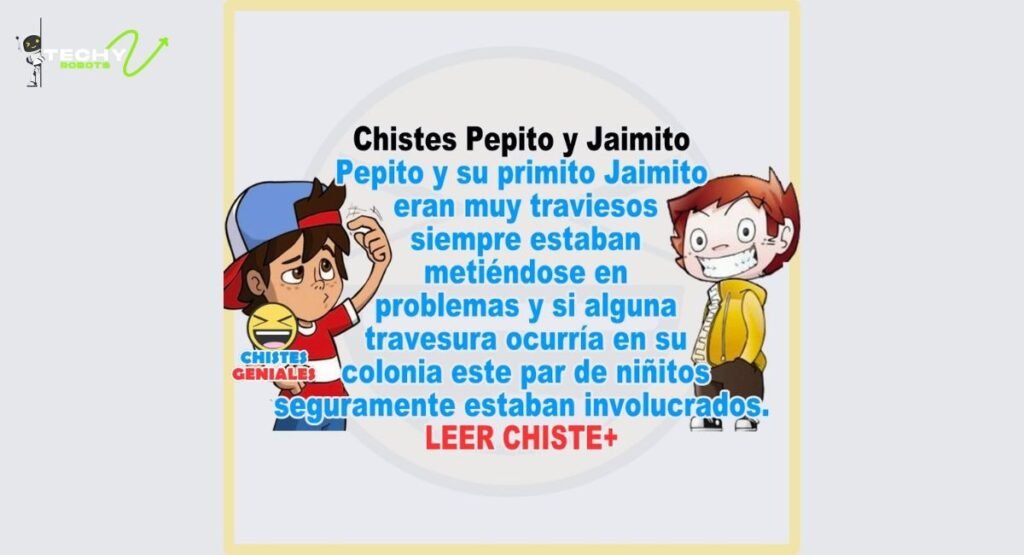
Just like English jokes often feature a priest, a rabbi, and a minister walking into a bar, Spanish jokes have their own recurring characters. Pepito and Jaimito are the kings of Spanish children’s humor, always getting into trouble at school or outwitting adults with unexpected answers.
La maestra le pregunta a Jaimito: “Si tienes doce caramelos y le das seis a tu amigo, ¿cuántos te quedan?” Jaimito responde: “Doce.” “¿Por qué doce?” “Porque yo no le doy nada.”
(The teacher asks Jaimito: “If you have twelve candies and give six to your friend, how many do you have left?” Jaimito says: “Twelve.” “Why twelve?” “Because I’m not giving him anything.”)
That joke works in any culture, but Jaimito gives it a very specific Spanish flavor. He’s stubborn, street-smart, and completely unbothered by authority. He’s been making Spanish speakers laugh since at least the early 20th century.
Juan and Manolo are the adult versions, the everyman characters in jokes about marriage, work, and getting through everyday life without too much drama. Think of them as the Spanish equivalent of a guy named Dave.
Conclusion
Jokes about the Spanish language are so much more than just funny lines. They’re a doorway into a living, breathing culture that spans continents, centuries, and an almost absurd variety of accents, dialects, and traditions. When you laugh at a Spanish pun, you’re not just enjoying a clever twist of words. You’re connecting with millions of people who have laughed at that same phonetic accident for generations.
The best thing about using humor to learn or appreciate Spanish is that it makes the whole process feel less like a task and more like a conversation you actually want to be part of. Every joke you understand is a small victory, a moment where the language clicks into place in a way that no textbook can replicate.
So next time you’re practicing your Spanish, don’t skip the jokes. Learn the chistes, share the bromas, and let yourself laugh out loud. Language is meant to be lived, and nothing brings a language to life faster than a really terrible pun delivered at exactly the right moment.
Frequently Asked Questions
1. What are some easy Spanish jokes for beginners?
Some great starter jokes include wordplay around nada (nothing/swimming), vaca (cow/vacation), and simple school-based humor featuring characters like Jaimito. These use everyday vocabulary and are easy to understand even with basic Spanish.
2. How do Spanish speakers laugh in text?
Instead of “hahaha,” Spanish speakers write “jajaja,” and sometimes “jejeje” or “jijiji” to express different tones of laughter. The j in Spanish is pronounced differently, so these aren’t just translations but genuinely distinct sounds.
3. What is the difference between Spanish jokes from Spain and Latin America?
Spanish humor from Spain tends to be dry and ironic, while Latin American humor varies widely by country. Mexican jokes often use absurdism and wordplay, Cuban humor is sharp and politically aware, and Argentine comedy tends toward intellectual self-awareness.
4. Can jokes really help you learn Spanish?
Absolutely. Humor creates strong emotional memories that make vocabulary and grammar stick. Understanding a joke requires grasping context, pronunciation, and meaning all at once, which is a very efficient form of language acquisition.
5. What are some famous characters in Spanish jokes?
Pepito and Jaimito are the most beloved child characters in Spanish jokes, known for their cheeky, unexpected answers to adult questions. Juan and Manolo serve as the adult everyman characters in humor about daily life, relationships, and work.